
'From the very start, PM Modi was insistent that visiting foreign leaders should be exposed to an India beyond its capital.' 'Through these experiences, he felt that the full Indian narrative would be much better understood across the world,' explains External Affairs Minister S Jaishankar. A riveting excerpt from Bluekraft Digital Foundation's Modi@20: Dreams Meet Delivery.

The reduction of tension on the Chinese border may have reduced the urgency of a Biden-Modi meeting, but the sooner Modi starts a bromance with Biden the better as he had done with Obama and Trump, suggests Ambassador T P Sreenivasan.
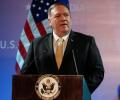
The United States, he said, 'desires a new age of ambition' in its relationship with India. Asserting that the US has never been more supportive of India's security, he said New Delhi too, is an important partner and a key pillar of President Trump's foreign policy.

The India-Japan joint naval exercises are a strategic signal for China, observes Dr Rajaram Panda.

Chinese hubris and the slippery slope it finds itself on have important lessons for authoritarian leaders elsewhere, including in India, observes Colonel Anil A Athale (retd).

By hosting the 10 ASEAN leaders on Republic Day, India amply demonstrated that ASEAN is a central pillar of its Act East policy. But is India 'central' for ASEAN, asks Dr Rahul Mishra.
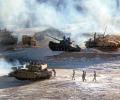
'India cannot allow Beijing's policy of stabilising and destabilising the border at will to perpetuate its own ends.' A riveting excerpt from Manish Tiwari's 10 Flashpoints; 20 Years National Security Situations That Impacted India.

A genuine attempt was made to reset relations in a positive way, signalling a stepping back from the brink of conflict, much to the relief of the world, observes Ambassador T P Sreenivasan.

The Western powers appear to regard Delhi as the most logical destination in the region in these extraordinary times -- as a counterpoint to the ascendance of political Islam and a rising red star over Afghanistan, observes Ambassador M K Bhadrakumar.

'India would not like to see Pakistani domination and tutelage of Afghanistan against Indian security and economic interests.'

It is a timely reminder that when faced with twin threats, India has succeeded by wisely choosing allies, points out Colonel Anil A Athale (retd).
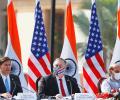
China is now the most significant strategic concern in Washington, as in most of the world's capitals, especially the democracies. Today, strategic autonomy has acquired a sharper definition: To ward off the Chinese challenge to India's territorial integrity, sovereignty and regional stature, observes Shekhar Gupta.

'Movement of naval forces at sea is often more than just perfunctory deployment -- reading the messages that they send is important,' alerts Vice Admiral Premvir Das (retd).

The IAF chief also said Pakistan has become a pawn of Chinese policy and its dependence on China would increase further in future. He said India needs to understand the interplay of some major events in its vicinity that would impact the security scenario of the region.

Bibhu Prasad Routray explains why the US is supporting Japan's resolve to release 'treated' radioactive waste water into the Pacific Ocean. And what role China plays in the US decision.

Beijing's growing assertiveness as kingmaker in Kabul has suffered a setback with Washington quietly moving in, observes Ambassador M K Bhadrakumar.

Describing the surge of COVID-19 infections and deaths in India as 'nothing short of heartbreaking', Vice President Kamala Harris said on Friday that India's welfare is critically important to the US.

The billions India invested in dams, schools, etc in Afghanistan will be gone. The Hindu and Sikh population of Afghanistan has already shrunk from some 200,000 to about 500, points out Rajeev Srinivasan.
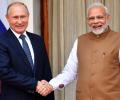
'Washington senses that the anchor sheet of India's strategic autonomy lies in its longstanding partnership with Russia, which remains firm and immutable despite the changes in world politics in the post-Cold War era,' notes Ambassador M K Bhadrakumar.<

The former Chief of Army Staff said India faces the most complex threats and challenges spanning a full spectrum of possible conflict -- from nuclear to sub-conventional -- but asserted that the armed forces are ready to deal with them.

It is our only chance of avoiding a repeat of our catastrophic second wave, asserts Naushad Forbes.

For two decades the US paid in blood and blood money for dependence on Pakistan to carry out one president's boast. Now, having been defeated by its proxies, another president will go into Rawalpindi's embrace to satisfy his constituents, predicts Shekhar Gupta.
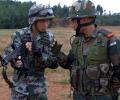
'The killings are a worrisome escalation of tensions, but little is known about the immediate causes or results of the fight in Galwan and it is not possible, at this point, to assign blame'

It is entirely conceivable that Modi began realising at some point that it will be a liability for India if he is seen as Trump's fellow traveller, observes Ambassador M K Bhadrakumar.

Snooping is one of the oldest peccadilloes of man, observes Ambassador M K Bhadrakumar.

'The immediate attempt by China is to get its way and gain territory through small steps without having a full-scale war.'

China's presence in the international dog house is just the kind of opportunity that his opponents must be waiting for, predicts Colonel Anil A Athale (retd).

The entire gamut of China's activities is aimed at keeping India on tenterhooks, cause fatigue to its troops and keeping its security system unstable, so that it cannot play a meaningful role in international geopolitics as an effective partner of the US and Japan, observes Lieutenant General Syed Ata Hasnain (retd).

The agreement would divert China's attention and keep them busy in the Pacific theatre, probably resulting in a reduction in threat perception in our area of interest in the Indian Ocean, notes Commodore Venugopal Menon (retd).
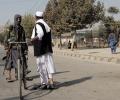
Pakistan would want to take full advantage of the situation to direct Taliban trained terrorists into the Kashmir Valley, alert Lieutenant General Ashok Joshi (retd) and Colonel Anil A Athale (retd).

'The credit for managing Trump should go to Modi.' 'Biden is a predictable and rational person with plenty of administrative experience,' notes Ambassador T P Sreenivasan.
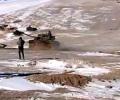
Who knows, the moment of truth in Ladakh may also augur for a giant leap toward boundary settlement with China in the fulness of time. The news that the special representatives of the two countries are planning to meet gives a positive signal, suggests Ambassador M K Bhadrakumar.

It will not be to India's advantage to create misperceptions that it is bandwagoning with some Anglo-American project for regime change in Myanmar, argues Ambassador M K Bhadrakumar.

When China protested strongly over the August decision on J&K -- not once but twice -- we ignored it. And to compound matters, we simply turned our back and walked over to the 'Quad' alliance with the US, upgrading it to ministerial level, and thereafter began following the American footfalls on Taiwan and COVID-19 to taunt and humiliate Beijing, observes Ambassador M K Bhadrakumar.

'India should be adequately prepared for further Chinese mis-adventures at any time in the next few years.'

BWith a distracted president brooding in the White House, Pompeo seems to think his day has come. He seems to be pushing a personal agenda before a target audience in America, observes Ambassador M K Bhadrakumar.

By 2022, there is a plan to make an mRNA-technology vaccine, for which it has tied up with Canadian firm Providence Therapeutics.
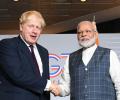
'We don't need to hinge India-UK relations on shared hostility toward China,' observes Ambassador M K Bhadrakumar.
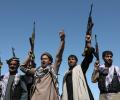
'But an overthrow of the Afghan government would really embolden regional militant groups in a big way.' 'LeT and JeM could be emboldened, and prompted to replicate in Kashmir what the Taliban did in Afghanistan.'

Chances are any such disruption will not occur on the major shipping lanes but on some edge of the ocean between India and China. Even if there is no actual disruption, the costs of averting one can be punitive. The setting for this is provided by the energy shortage both countries face, says Subhomoy Bhattacharjee.
